
There are a lot of resources that can help you identify the insects you are coming across. However, it can be hard to find good ones or they can be spread far out across the internet.
Here I try not only to compile links to as many as I can but on some I try to modify them to make them easier for beginners.
If you have an identification guide or tool you use, please let me know!


I Want to Learn How to Identify!
Keys and guides are the better way of identifying an insect yourself.
A good picture can go a long way.
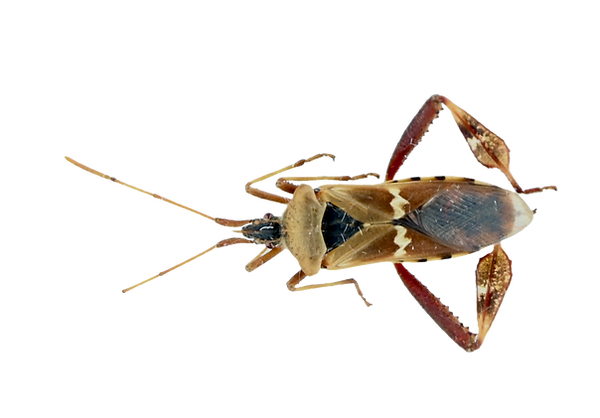
There are a few websites where you can submit a picture and other people can identify them. With a decent picture many entomologists can tell you what order or even family an invertebrate belongs to. However, the better the picture and the more angles you include the better the identification will be. Many invertebrates require a photograph of a specific area to identify them, for example spider identification depends a lot on the eye and mouth part arrangement. Some species will not be able to be identified from a picture at all, many insects require looking at the genitalia which needs to be pulled out of a preserved specimen in order to know for sure what species it is. Again, any picture is better than nothing but the more the invertebrate takes up within the frame the better, just make sure to be safe. If you're not sure if it bites or stings don’t get too close.
If you haven’t used it before, iNaturalist is probably the easiest platform to use. You post a picture and other people help identify it. The problem is that because anyone can identify means that there can be misidentifications. However, more entomologists are starting to use it more regularly so the identifications are getting much better. Most identifications to family or even genus level are pretty accurate. On any identification suggestion I would do some research (see some of the other resources here) and see what entomologists actually use to identify that species, if what they are using can’t be seen in the picture, chances are the suggestion isn’t good. You can also ask the person that suggested the identification to provide a reason why they suggested that.



What keys and other resources are there for identification?
Many of these guides are keys, if you have never used a key before, click here for a brief overview. Some of these keys can get pretty intense. Eventually I want to make the more intense keys easier with pictures and explanations but this will take time and working with the original authors. For now you'll have to use the original publication. Some publications aren't publicly available, for these reach out to local libraries or universities which may be able to help you borrow a copy. You can also reach out to the authors who are usually more than happy to share their publication with you!
Don't know what order your specimen is?
Under the section "Know what order your specimen is?" is a drop down menu with order descriptions that will work for the most common species. There are a few tricky specimens that may not fit the order descriptions. For those, see the key below.
Know what order your specimen is?
Use the drop down menu to select an order and then click the link to see more identification guides for that group. The drop down menu is alphabetical according to order name
Blattodea - Cockroaches/Termites

Drawing of a typical winged cockroach.
Blattodea recently underwent massive taxonomic changes, one of these changes was the discovery that termites (that were previously their own order) are actually cockroaches. Excluding termites, cockroaches are generally flattened and dark colored. Their pronotum extends over the tops of their head, hiding the head almost entirely from the top. They can be winged or wingless, the forewings when present are slightly to fully leathery. Termites are usually small white or clear colored eusocial insects. This means, similar to bees and ants, a colony has a single reproductive pair and workers that have specialized jobs. Discovering that termites are cockroaches was quite revolutionary. It was always known the termites were close relatives but this means that cockroaches were able to become eusocial insects. Termites are only winged if they are the reproductive pair and only for a short time. They are also more cylindrical than the flattened cockroaches. Termites can be distinguished from ants because the abdomen broadly joins the thorax.

This Page is still being worked on. Check Back Soon!
What is a key?
Keys are the better way of identifying an insect yourself(especially if they are well written). Keys present you with 2 or more different features to look at, you pick the option that best relates to your specimen and then it tells you where to go next. Once you go through enough options it will tell you what group your insect belongs to. The downsides are they usually work best with the specimen in front of you (preferably preserved) and can take a long time. If your specimen is common or iconic, a key is probably a waste of time. For example, larger, more colorful specimens, like this swallow-tail butterfly, are more likely to be identifiable with a picture on one of the websites above. However, there are just some groups that are better to use keys if you’re not familiar with them, for example true flies (Diptera) or many wasps (Hymenoptera). Generally what I do is go as far down in identification as I can then start using keys.